Table of contents
The debate around machines and workplace creativity is more relevant than ever. As technology continues to advance, questions arise about whether automation and artificial intelligence truly spark innovation or merely stifle human ingenuity. Unpacking the complex relationship between machines and creativity in professional settings provides insights that are both timely and compelling. Explore the perspectives that follow for a nuanced understanding of this essential topic.
The evolving role of machines
Machines have dramatically reshaped the modern workplace, accelerating a shift from traditional manual labor to processes dominated by workplace automation and digital transformation. Through advancements in machine learning and cognitive automation, tasks that once required significant human effort are now executed with remarkable speed and precision. This transformation allows employees to focus on higher-value activities, potentially fostering employee innovation as routine responsibilities are delegated to intelligent systems. Yet, this streamlined efficiency can also introduce challenges. Increased reliance on cognitive automation may limit opportunities for hands-on problem-solving, creating a risk that human ingenuity is overshadowed by algorithmic decision-making. Balancing automation and human creativity is pivotal as organizations navigate the future of work, ensuring that digital tools serve as catalysts for, rather than barriers to, meaningful innovation.
Collaboration between humans and machines
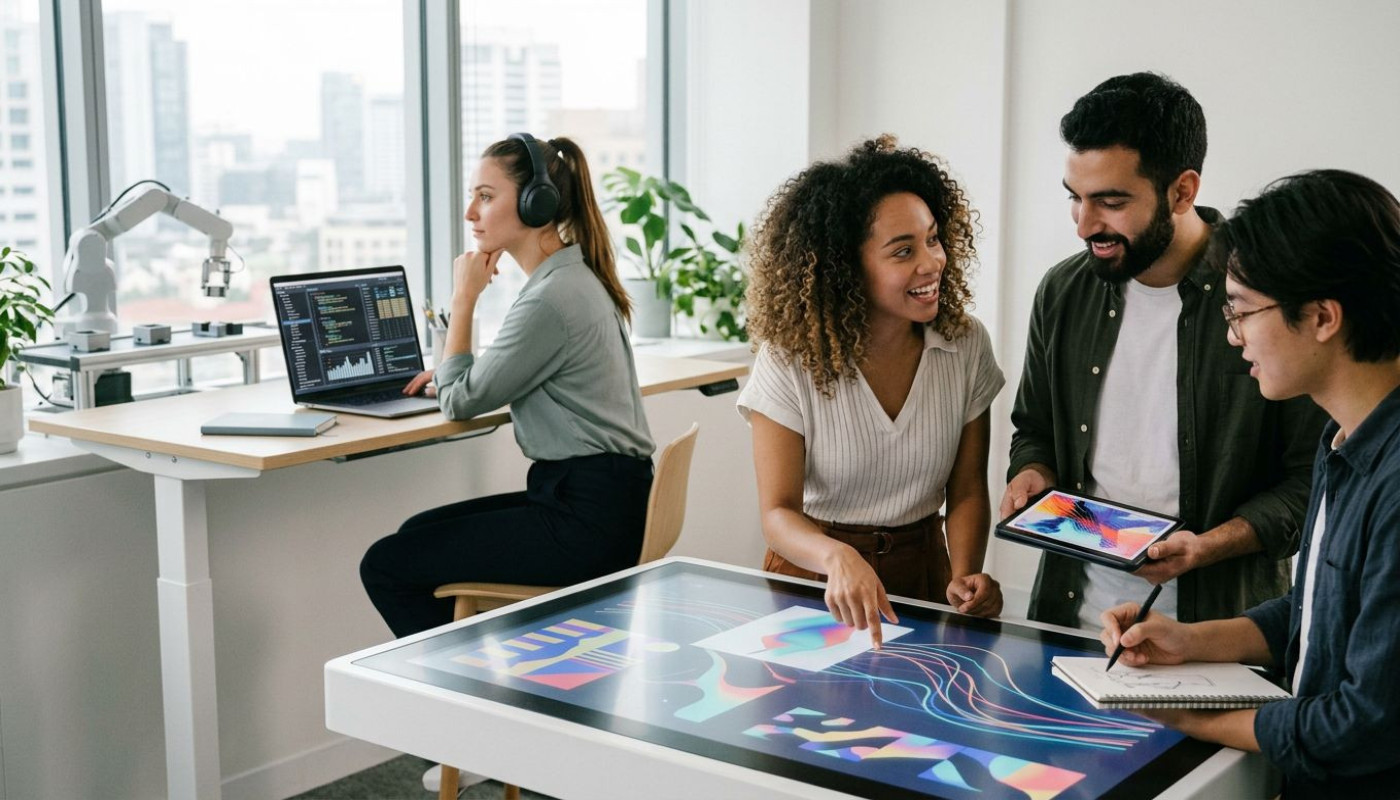
The integration of artificial intelligence into human-machine teams is reshaping the landscape of creative collaboration in the workplace. By leveraging collaborative intelligence, organizations unlock unique possibilities for work innovation, as machines provide rapid data processing and pattern recognition while humans contribute contextual understanding and intuition. This synergy, often termed augmented intelligence, enables teams to approach creative problem-solving with enhanced capacity, combining human insight with machine precision to generate novel solutions that neither could achieve alone. The Head of Research and Development routinely observes that the blend of human imagination and technological capability not only streamlines workflows but also inspires the exploration of unconventional strategies across various industries.
Despite this promising outlook, merging human intuition with algorithmic reasoning introduces specific challenges. Communication barriers can emerge, as employees may struggle to interpret or trust machine-generated recommendations, potentially hindering the flow of ideas within human-machine teams. Additionally, there is a persistent need for upskilling the workforce to maximize the benefits of augmented intelligence while ensuring that the creative collaboration does not become overly reliant on technology. Addressing these dynamics, organizations that prioritize transparent processes and foster mutual understanding between humans and machines are best positioned to harness the full potential of collaborative intelligence for genuine work innovation.
Innovation bottlenecks and breakthroughs
Innovation barriers often emerge when machines, particularly those driven by algorithms, inadvertently reinforce existing patterns through algorithmic bias. In scenarios where AI limitations manifest, such as automated hiring systems that replicate historical biases or recommendation engines that only suggest familiar solutions, workplace creativity can be stifled. Employees may feel discouraged from deviating from machine-generated suggestions, resulting in reduced creative thinking and risk-taking. On the other hand, breakthrough technology has repeatedly demonstrated the capacity to amplify innovation when thoughtfully integrated. AI-enabled platforms can process vast data sets to uncover hidden trends, inspire novel connections, and free up workers from routine tasks, allowing them to focus on ideation and experimentation. The balance between these extremes hinges on how technology is designed, implemented, and monitored—intentional oversight and diverse data inputs are vital to prevent algorithmic bias from becoming an entrenched innovation barrier. In workplaces where human ingenuity and machine efficiency are harmonized, the path is cleared for both incremental and disruptive breakthroughs.
Shaping the future of innovation
As emerging technologies redefine the boundaries of what is possible, workplace trends point toward an era where disruptive innovation becomes the norm. The digital workplace is rapidly evolving, unlocking opportunities for future innovation that were previously unimaginable. With artificial intelligence, machine learning, and automation systems advancing, businesses are reimagining their operating models, integrating human insight with machine efficiency. This intersection fosters creative disruption, enabling teams to experiment with new ideas and methodologies at unprecedented speed and scale. The future will likely see machines not only streamlining repetitive tasks but also augmenting human creativity, encouraging collaborative experimentation that leads to entirely new products, services, and solutions.
Looking ahead to the next decade, predictions indicate that the fusion of digital workplace tools with human expertise will spawn a wave of disruptive innovation across industries. As organizations adapt and adopt emerging technologies, agility, adaptability, and continuous learning will become core competencies for success. Innovative business models may arise, leveraging machine-driven insights to anticipate market needs and deliver value faster. This evolving landscape promises a dynamic environment in which creative disruption is not just a possibility but a driving force, shaping new norms and redefining how innovation is cultivated and realized in the modern workplace.
Impact on employee skillsets
The integration of intelligent machines into the workplace is reshaping workforce skills dramatically, compelling employees to embrace new approaches and techniques. As automation becomes commonplace, routine tasks are increasingly handled by machines, making creative skills, critical thinking, and adaptability highly sought-after assets in the future workforce. Employees must now develop robust digital literacy to collaborate effectively with advanced technologies and contribute to innovative problem-solving. This shift highlights the significance of reskilling strategies, which involve targeted employee training programs designed to address evolving job requirements and nurture a culture of continuous learning within organizations. Fostering such an environment not only supports individual growth but also drives sustained business innovation.
Leaders in human resources are recognizing the necessity of reskilling initiatives that focus on cultivating creative skills alongside technical competencies. These programs are most effective when integrated with mentorship, project-based learning, and cross-functional collaboration, allowing employees to practice adaptability in real-world settings. As digital literacy becomes a non-negotiable component of workforce skills, investment in accessible training platforms and flexible learning opportunities ensures that staff can keep pace with the technological advancements that define the modern workplace. Managers are also encouraged to champion a growth mindset, empowering employees to view change as an opportunity for personal and professional development.
In preparing for a rapidly evolving future workforce, organizations should frequently assess skill gaps and anticipate changing demands, leveraging both internal and external resources for ongoing development. For those seeking guidance on aligning employee training with the digital transformation brought about by AI and automation, more helpful hints can provide practical advice and up-to-date insights to support strategic workforce planning.
On the same subject
Invisible Heroes: How Electromechanical Integration Powers Smart Cities

How Invisible Fees Silently Reshape Your E-commerce Business Model

Maximizing Wins: Strategic Betting Techniques In Online Slots

How To Instantly Buy Digital Entertainment Products With Mobile Billing?
How Generative AI Is Transforming Creative Industries
How AI-powered Tools Are Shaping The Future Of Digital Art Creation

Exploring The Impact Of Zero Processing Fees On Nonprofit Fundraising
Exploring The Benefits Of Free Online AI Conversational Models